
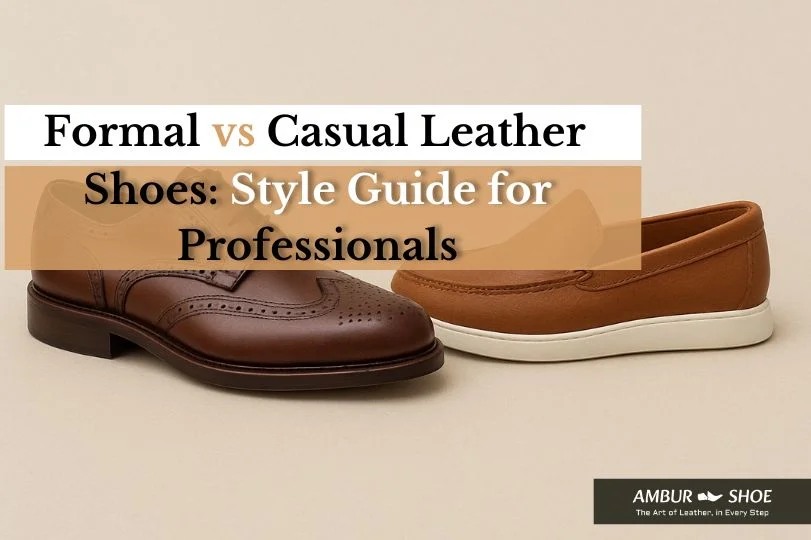
Guide to choosing formal vs casual leather shoes with key differences, style tips, and expert advice for professionals to pick the right pair for any occasion.
Let’s face it — shoes do a lot more than just cover your feet. They quietly tell the world how seriously you take yourself. Walk into a meeting wearing scuffed loafers, and you’ll feel the difference in how people look at you. Walk in with polished leather Oxfords or sleek loafers, and you command attention without saying a word.
Now here’s the thing — not every leather shoe works for every setting. The secret lies in knowing when to wear formal shoes and when to go casual, especially if you move between offices, airports, and after-work dinners. Let’s break it down.
Choosing between formal vs casual leather shoes can make a significant difference in how you present yourself in professional and social settings.
Formal vs Casual Leather Shoes: The Real Difference
Understanding formal vs casual leather shoes helps professionals build a wardrobe that works for every occasion.
The difference isn’t just design — it’s attitude.
- Formal leather shoes are structured, polished, and precise. They’re made to complement suits and tailored outfits.
- Casual leather shoes are relaxed, versatile, and a little playful. They pair beautifully with jeans, chinos, or even smart dresses.
According to Statista’s 2024 Global Footwear Report, formal leather shoes still hold 38% of the premium footwear market, while casual leather shoes have surged past 55%, thanks to the rise of hybrid work and flexible fashion codes.
What this really means is — style has shifted. People want elegance with comfort.
The Anatomy of a Formal Leather Shoe
The Design Language
Formal shoes follow symmetry and precision. Think Oxfords, Derbies, Monk Straps, and Brogues. They’re built with closed lacing systems, slim silhouettes, and minimal seams. Every curve is intentional — from the arch line to the toe box.
Materials That Matter
High-grade full-grain or top-grain leather dominates this category. The grain is tighter, giving that natural shine and durability. Many Italian and Spanish tanneries still use vegetable tanning, a process that gives formal shoes their distinctive rich tone and long life.
When to Wear
- Job interviews and corporate meetings
- Business dinners and conferences
- Weddings, formal receptions, and black-tie events
Pair them with a well-tailored suit or a crisp shirt and trousers. For women, pointed-toe leather pumps or Oxford-style lace-ups work beautifully with power suits or midi skirts.
The Spirit of Casual Leather Shoes
Freedom in Form
Casual leather shoes include loafers, moccasins, Chelsea boots, sneakers, and sandals. Their designs are relaxed but stylish. Unlike formal pairs, they might have open stitching, textured finishes, or flexible soles that bend easily.
The global footwear industry saw a 27% rise in casual shoe demand between 2020 and 2024 (Source: Vogue Business). The reason? People are dressing for comfort without giving up style.
When to Wear
- Weekend brunches or travel days
- Casual Fridays at work
- Networking events or semi-formal gatherings
For men, tan loafers or suede Derbies pair perfectly with chinos. For women, leather slip-ons or ankle boots go well with dresses or jeans.
How to Tell Them Apart Instantly

Good shoes are more than accessories — they’re an expression of discipline and taste.
Choosing Between Formal vs Casual Leather Shoes for Every Occasion
The debate between formal vs casual leather shoes often depends on the dress code, comfort needs, and personal style preferences.
At Work
Corporate jobs still lean toward classic black or brown Oxfords. But hybrid offices have relaxed the rules. You can confidently wear a pair of tan loafers or clean white leather sneakers on a casual Friday — as long as they’re well maintained.

Business Travel
Comfort meets class here. A pair of dark brown loafers or Chelsea boots can take you from airport lounges to client dinners. Look for cushioned insoles and slip-on styles that make security checks effortless.

Evening Events
Swap the sneakers for something polished. Men can go for Monk Straps; women can choose pointed leather heels or block-heeled loafers. Balance shine with texture — it adds depth to your outfit.

Global Style Trends You Should Know
Modern fashion trends have blurred the line between formal vs casual leather shoes, creating more versatile footwear options.
- Sustainability is leading: Eco-friendly leather, recycled soles, and vegetable-tanned materials are growing fast.
- Unisex designs are trending: Brands are designing shoes that appeal across genders — sleek loafers and ankle boots top the list.
- Color experimentation: 2025 runway collections (Paris, Milan, and New York) saw more earthy tones like olive, cognac, and sand replacing plain black.
- Smart comfort tech: Memory foam insoles, lightweight rubber compounds, and adaptive fits are shaping the future of premium footwear.
According to Forbes Fashion Insights (2025), global consumers spend 15% more on quality leather footwear than they did five years ago. That shows one thing — quality and craftsmanship never go out of style.
How to Style Leather Shoes Like a Pro
For Men
- Pair dark Oxfords with navy suits — timeless and sharp.
- Match brown Derbies with beige chinos for a relaxed business look.
- Try suede loafers with denim and an Oxford shirt for travel or brunch days.
For Women
- Black leather pumps with pencil skirts for boardrooms.
- Tan ankle boots with flowy dresses for weekend outings.
- White leather sneakers with blazers for the perfect “smart-casual” vibe.
Pro tip: Match your belt or handbag to your shoe color for instant balance.
How to Maintain Leather Shoes
Investing in quality formal vs casual leather shoes is only part of the equation; proper maintenance is equally important.
Let’s be honest — the shine you get on Day 1 doesn’t last forever unless you take care of it.
- Clean dust using a soft brush after every wear.
- Use natural shoe creams (avoid waxes with harsh chemicals).
- Always use shoe trees to retain shape.
- Store them in cotton bags, not plastic covers.
- Rotate between pairs — leather needs rest to breathe.
A survey by Leather Footwear Association (2024) revealed that well-maintained shoes last 3x longer than neglected ones.
The Smart Way to Build a Shoe Wardrobe
You don’t need twenty pairs. You need the right five.
For men:
- Black Oxfords – for formal events
- Brown Derbies – daily office wear
- Tan Loafers – casual Fridays
- White Leather Sneakers – modern touch
- Chelsea Boots – travel and winter
For women:
- Black Pumps – formal must-have
- Tan Ankle Boots – stylish yet practical
- Loafers – versatile comfort
- Sneakers – clean, minimal look
- Heeled Sandals – semi-formal events
Invest in quality, not quantity. Because shoes, unlike trends, are supposed to stay.
Why Leather Still Wins Over Synthetics
Leather ages beautifully. It molds to your feet, improves with wear, and develops a patina that tells your story. Synthetic shoes may look sharp at first, but they rarely breathe, bend, or last the same way.
If you’re curious about what makes good leather different, check out our upcoming guide — What Is Full-Grain Leather & Why It’s Best for Leather Shoes?
Final Thoughts
When it comes to formal vs casual leather shoes, the best choice depends on where you’re going and the impression you want to make.
Formal vs casual — it’s not a competition. It’s a matter of context. Once you understand what each pair says about you, you’ll never feel underdressed or overdressed again.
The next time you shop for leather shoes, ask yourself — where will I wear them, and how do I want to feel in them? That simple question changes everything.
So, which side are you on? The sharp-edged elegance of formal, or the effortless confidence of casual? Tell us in the comments below — your story might just inspire someone’s next pair.